How to Prepare for Rhinoplasty in Korea

Pre-Surgery Checklist, Consultation Guide, Aftercare and Long-Term Recovery
Medipact Editorial Team | medipact.co.kr | Updated April 2025
Introduction
Rhinoplasty in Korea is one of the most researched procedures among international patients, especially those looking for detailed nose reshaping, bridge refinement, tip work, or functional improvement. However, a successful treatment journey depends on more than choosing a famous clinic. It requires realistic expectations, careful consultation, clear communication, transparent pricing, and safe recovery planning.
This guide explains how to prepare for rhinoplasty in Korea, from choosing a clinic and attending consultations to understanding aftercare and long-term healing. It is written for international patients who want to approach nose surgery in Korea with a clearer understanding of the process.
For patients travelling from abroad, MEDIPACT can help compare suitable rhinoplasty clinics in Korea, coordinate consultations, support communication in Korean, and clarify key details such as schedule, cost, aftercare, and recovery planning before you make a decision.
1. Why Preparation Is Half the Surgery
Rhinoplasty outcomes depend on three factors: the surgeon’s skill, your anatomy, and how well you prepare. The first two are largely fixed before surgery. Preparation is the one factor entirely within your control.
Patients who prepare carefully are more likely to understand the surgical plan, follow medical instructions properly, and manage recovery smoothly. In contrast, rushed decisions, incomplete consultations, or unmanaged health factors can make the process more stressful and increase avoidable risks.
KEY INSIGHT
Rhinoplasty is not just a cosmetic procedure. It is a medical intervention that requires careful planning from consultation through to long-term follow-up.
2. How to Choose a Rhinoplasty Clinic in Korea
The surgeon you choose is the single most important decision in this entire process. Seoul alone has hundreds of plastic surgery clinics, and the quality varies enormously. A polished website and a curated Instagram page tell you very little about surgical outcomes. Choosing a rhinoplasty clinic in Korea should involve more than checking before-and-after photos. International patients should also consider consultation quality, communication support, aftercare access, cost transparency, and how clearly the surgeon explains limitations.
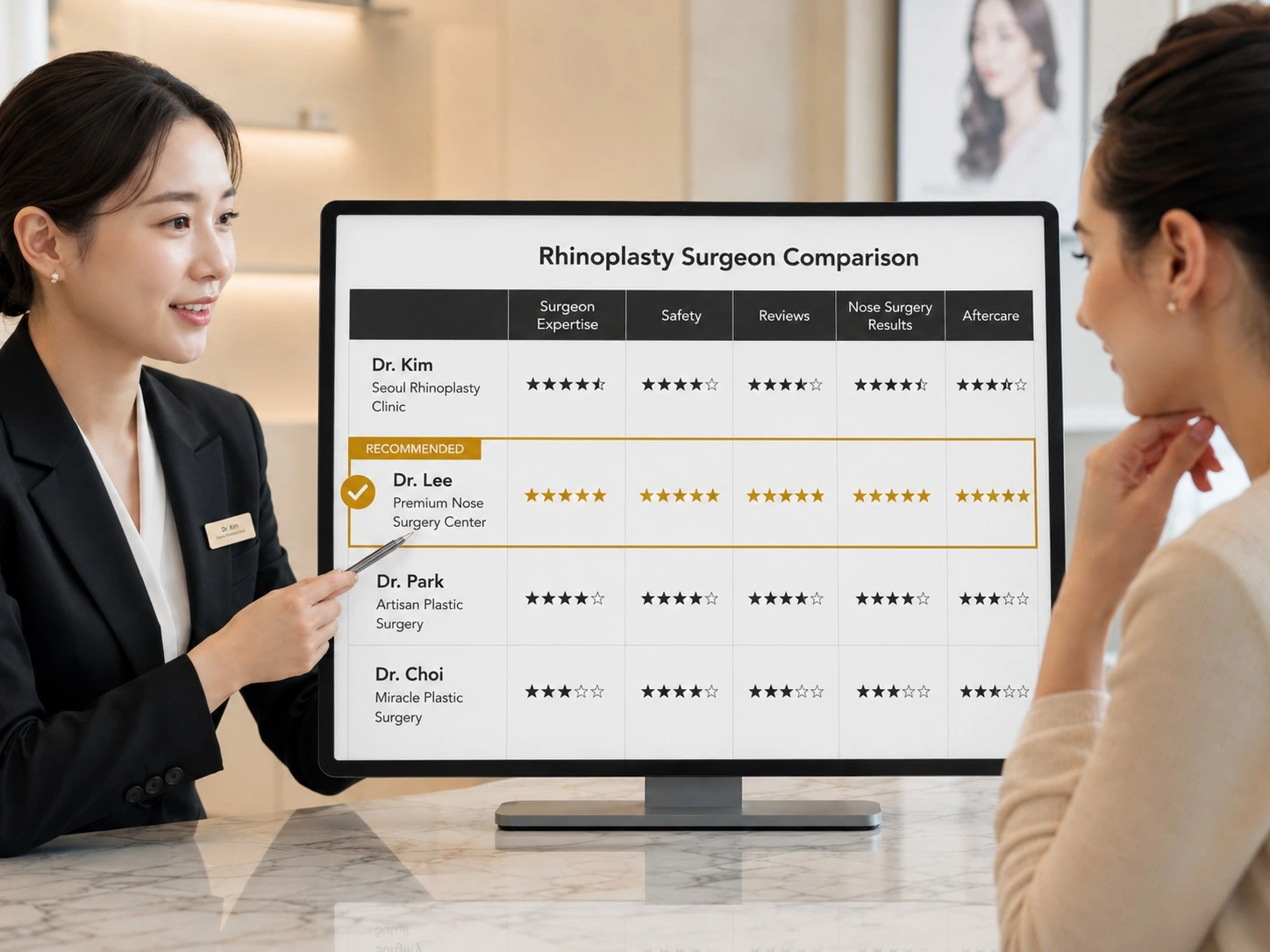
Step 1: Look at multiple sources before deciding
Use a combination of Korean platforms (e.g. Naver blogs), international reviews, and patient forums. Focus on how surgeons communicate and manage expectations, not just final photos.
Step 2: Be cautious of clinics that agree with everything
A trustworthy surgeon will provide honest, realistic guidance based on your individual factors such as facial structure, skin thickness, nasal cartilage, and overall balance. In rhinoplasty, not every desired outcome is achievable or suitable for every patient. If a clinic agrees to all your requests without careful examination or detailed consultation, this can be a red flag. High-quality surgeons will often explain limitations, suggest alternative approaches, or recommend a more natural result that fits your features.
Step 3: Consider multiple consultations before making a decision
It is generally recommended to consult with two or more clinics before proceeding with rhinoplasty. This allows you to compare different medical opinions, surgical approaches, and expected outcomes.
For international patients, MEDIPACT can help coordinate clinic consultations, language support, and key planning details such as surgical method, full cost, stay duration, and aftercare.
3. What to Prepare for a Rhinoplasty Consultation in Korea
The consultation is the most important tool you have before surgery. It is not a formality or a sales meeting. It is where the surgical plan gets built, expectations get calibrated, and a working relationship with your surgeon is established. The more prepared you are going in, the more useful it becomes. A rhinoplasty consultation in Korea should help you understand not only the expected nose shape, but also the surgical method, implant or cartilage options, recovery time, follow-up schedule, and possible risks.

1. Before Your Consultation
Write down your two or three main concerns about your nose. Try to be specific, for example: the tip looks too wide, the bridge is too flat, or you have difficulty breathing through one side.
Collect reference photos of nose shapes you find appealing and, equally useful, ones you want to avoid.
List every medication, supplement, and vitamin you currently take, including anything you consider minor.
Prepare a summary of your medical history, including any previous surgeries, known allergies, and any past reactions to anaesthesia.
If you want to understand different rhinoplasty types by nose shape, such as low nose correction, bulbous tip correction, hump nose correction, or short nose correction, you can also read MEDIPACT’s guide to customized rhinoplasty in Korea and facial harmony.
2. What a Thorough Consultation Should Cover
Facial structure assessment: Your surgeon should look at how your nose relates to the rest of your face, including skin thickness, bridge height, and nostril width. A good surgeon is not just focused on the one thing you want changed.
Medical history review: Chronic conditions, bleeding disorders, autoimmune issues, and any prior nose procedures all affect how surgery is approached and what anaesthesia is appropriate.
Implant and material options: Your surgeon should explain what materials are being proposed, whether silicone, ear cartilage, or rib cartilage, and give you clear reasons for each recommendation.
Surgical method: Open and closed rhinoplasty have different implications for scar placement, recovery time, and the difficulty of any future revision. Ask specifically why one is being recommended for your case.
Honest outcome expectations: A surgeon worth trusting will tell you what cannot be achieved as clearly as what can, including any limitations related to your natural anatomy or skin type.
4. Rhinoplasty Pre-Surgery Checklist for International Patients
Use this checklist in the weeks before your rhinoplasty. Items are grouped by category so you can work through them systematically.
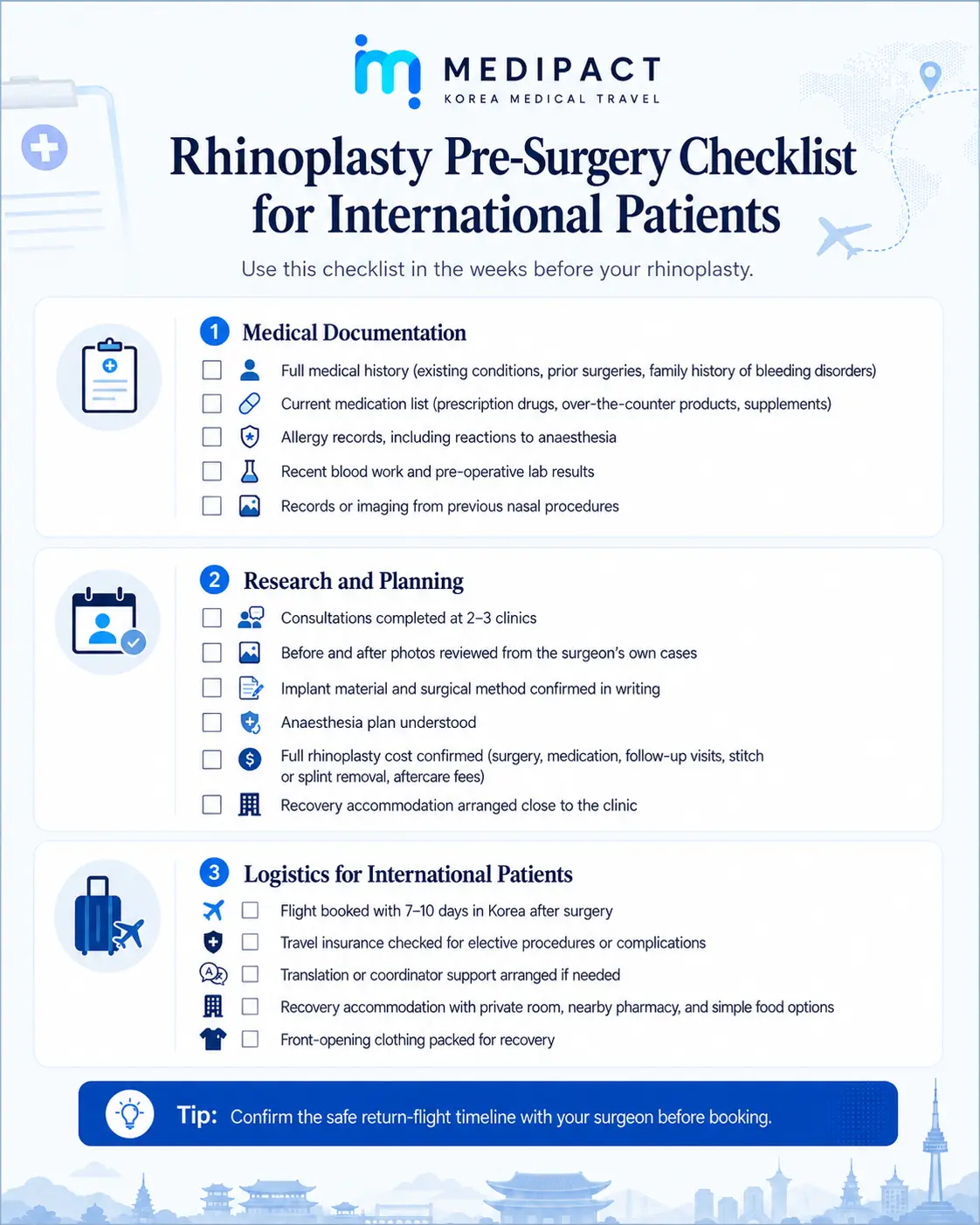
Medical Documentation
Full medical history covering existing conditions, prior surgeries, and any family history of bleeding disorders.
A current medication list including prescription drugs, over-the-counter products, and all supplements.
Allergy records, including any known reactions to anaesthesia.
Recent blood work and pre-operative lab results as specified by your clinic.
Any records or imaging from previous nasal procedures.
Research and Planning
Consultations completed at a minimum of two or three clinics.
Before and after photos reviewed specifically for your surgeon's own cases.
Implant material and surgical method confirmed in writing.
Anaesthesia plan understood, with alternatives discussed if relevant.
Full rhinoplasty cost confirmed, including surgery, medication, follow-up visits, stitch or splint removal, and any aftercare fees.
Recovery accommodation arranged close to the clinics
Logistics for International Patients
Flight booked with at least seven to ten days in Korea after surgery before you fly home. Confirm the exact safe travel window with your surgeon.
Travel insurance policy reviewed to check whether it covers elective procedures or surgical complications.
Translation or coordinator support arranged if you need it.
Recovery accommodation arranged with a private room, access to a nearby pharmacy, and simple food options.
Clothing packed that opens at the front. Nothing that needs to be pulled over your head during recovery.
5. Lifestyle Adjustments in the Two Weeks Before Surgery
What you do and avoid in the two weeks before rhinoplasty has a direct impact on your risk level during surgery, the amount of bleeding the surgeon has to manage, and how quickly you recover afterwards. These are clinical guidelines based on how your body responds to surgery, not general wellness advice.
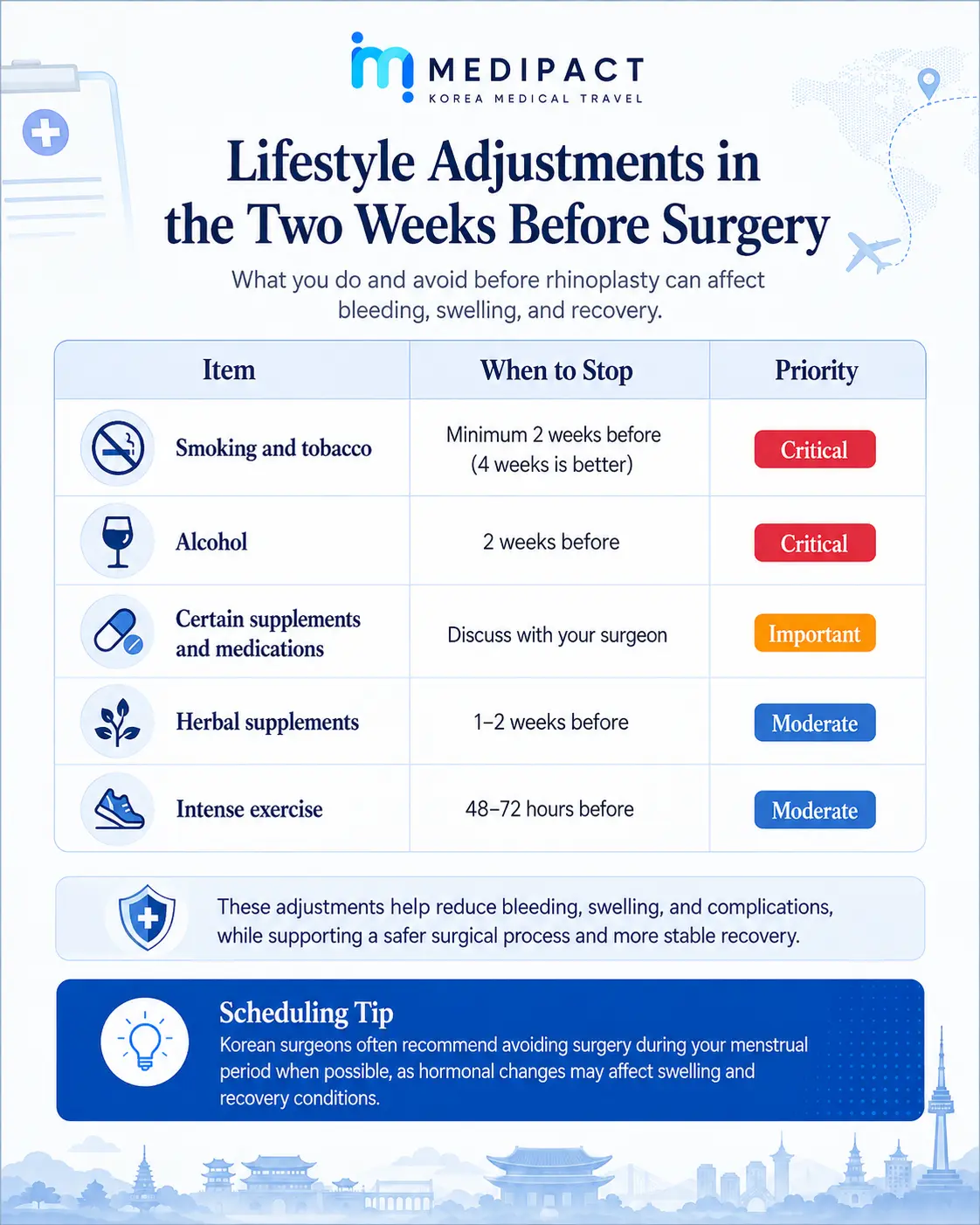
Item | When to Stop | Priority |
Smoking and tobacco | Minimum 2 weeks before (4 weeks is better) | Critical |
Alcohol | 2 weeks before | Critical |
Certain supplements and medications | Discuss with your surgeon | Important |
Herbal supplements | 1–2 weeks before | Moderate |
Intense exercise | 48–72 hours before | Moderate |
These adjustments help reduce bleeding, swelling, and complications, while supporting a safer surgical process and more stable recovery.
SCHEDULING TIP
Korean surgeons often recommend avoiding surgery during your menstrual period when possible, as hormonal changes may affect swelling and recovery conditions.
6. Rhinoplasty Aftercare: Post-Surgery Care in the First Two Weeks

Rhinoplasty aftercare is especially important for international patients because the first two weeks often include swelling control, medication management, wound checks, splint removal, and decisions about when it is safe to fly home.
The first fourteen days after rhinoplasty are the most critical period for shaping your long-term outcome. Swelling and bruising are completely normal during this time. What determines the final result is how carefully you manage that recovery window.
Days One Through Three
Cold compress: Wrap an ice pack in a cloth and apply it to the cheek and eye area, not directly on the nose, for about 15 to 20 minutes on and 15 minutes off. Keep this going for the first 72 hours. It is one of the most effective things you can do to reduce swelling.
Sleep position: Keep your head elevated at 30 to 45 degrees at all times. Do not sleep flat and do not sleep on your side. Both positions add pressure and fluid to the nose.
Medications: Take everything prescribed to you on schedule. Finish the full course of antibiotics even if you feel completely fine. Stopping early is one of the most common causes of post-op infection.
Days Four Through Fourteen
Keep the nose area dry: Keep to light face washing and avoid the nose area entirely. No swimming, steam rooms, or submerging your face. Moisture compromises the splint and creates conditions for infection.
No strenuous activity: Avoid exercise, heavy lifting, bending forward, or anything that raises your heart rate for at least four weeks. Even moderate exertion can trigger renewed swelling and bruising.
No glasses on the nose: Glasses press continuously on the bridge and can shift the implant during healing. Switch to contact lenses for four to six weeks.
Avoid blowing your nose or suppressing sneezes: Do not blow your nose. If you need to sneeze, let it out through your mouth. Forceful nasal pressure can dislodge grafts and cause bleeding.
No alcohol or smoking: Both are strictly off limits for at least four weeks after surgery. Smoking in particular significantly increases the chances of poor wound healing and implant complications.
Sun protection every day: Apply at least SPF 30 sunscreen every morning while you are healing. UV exposure causes pigmentation changes in the sensitive post-surgery skin around your nose and slows the fading of bruising.
Contact Your Clinic Immediately If You Notice:
Pain that is getting worse instead of better, or is not controlled by your prescribed medication
Fever above 38°C
Sudden nose bleeding
Signs of infection, such as increasing redness, warmth, or discharge
Both nostrils feeling completely blocked with persistent severe congestion
Any physical impact or trauma to the nose
7. Rhinoplasty Recovery Timeline and Long-Term Aftercare
A lot of patients assume recovery is over once the splint comes off. In reality, the nose is still actively healing for three to six months after surgery. What you do during that period has a direct effect on whether the result holds or whether problems develop that eventually require reoperation.
A general rhinoplasty recovery timeline can help you plan your stay in Korea, but every patient heals differently. Your actual rhinoplasty recovery time may vary depending on your surgical method, skin thickness, swelling pattern, cartilage or implant use, and your surgeon’s aftercare instructions.
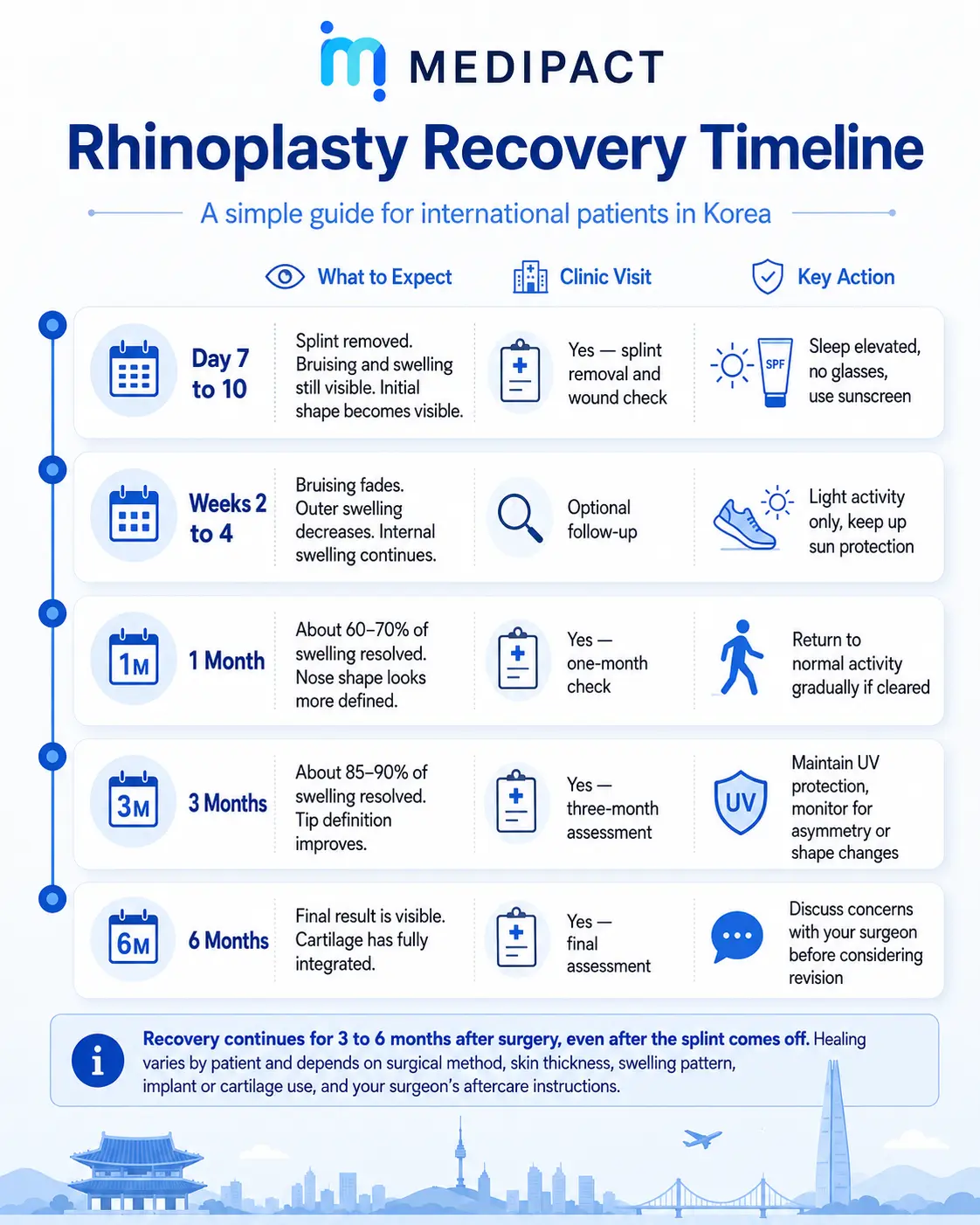
Recovery Milestones and Scheduled Check-ups
Timepoint | What to Expect | Clinic Visit | Key Actions |
Day 7 to 10 | Splint is removed. Significant bruising and swelling are still present but the initial shape becomes visible. | Yes, for splint removal and wound check. | Continue elevated sleeping position. No glasses. Apply sunscreen daily. |
Weeks 2 to 4 | Most visible bruising fades and outer swelling begins to reduce. Internal swelling continues. | Optional follow-up visit. | Light activity only. Keep up sun protection. |
1 Month | Roughly 60 to 70 percent of swelling has resolved and the nose shape becomes more defined. | Yes, for a one-month status check. | Begin gradually returning to normal activity once your surgeon confirms clearance. |
3 Months | Around 85 to 90 percent of swelling resolved. Tip definition continues to improve. | Yes, for a three-month assessment. | Maintain UV protection. Monitor for any changes in shape or asymmetry. |
6 Months | Most of the final shape is visible. If your own cartilage was used, it may continue to settle and integrate depending on the patient. | Yes, for a final assessment. | If you are unhappy with the result, discuss with your surgeon before making any decisions about revision. |
Protecting Your Result Over Time
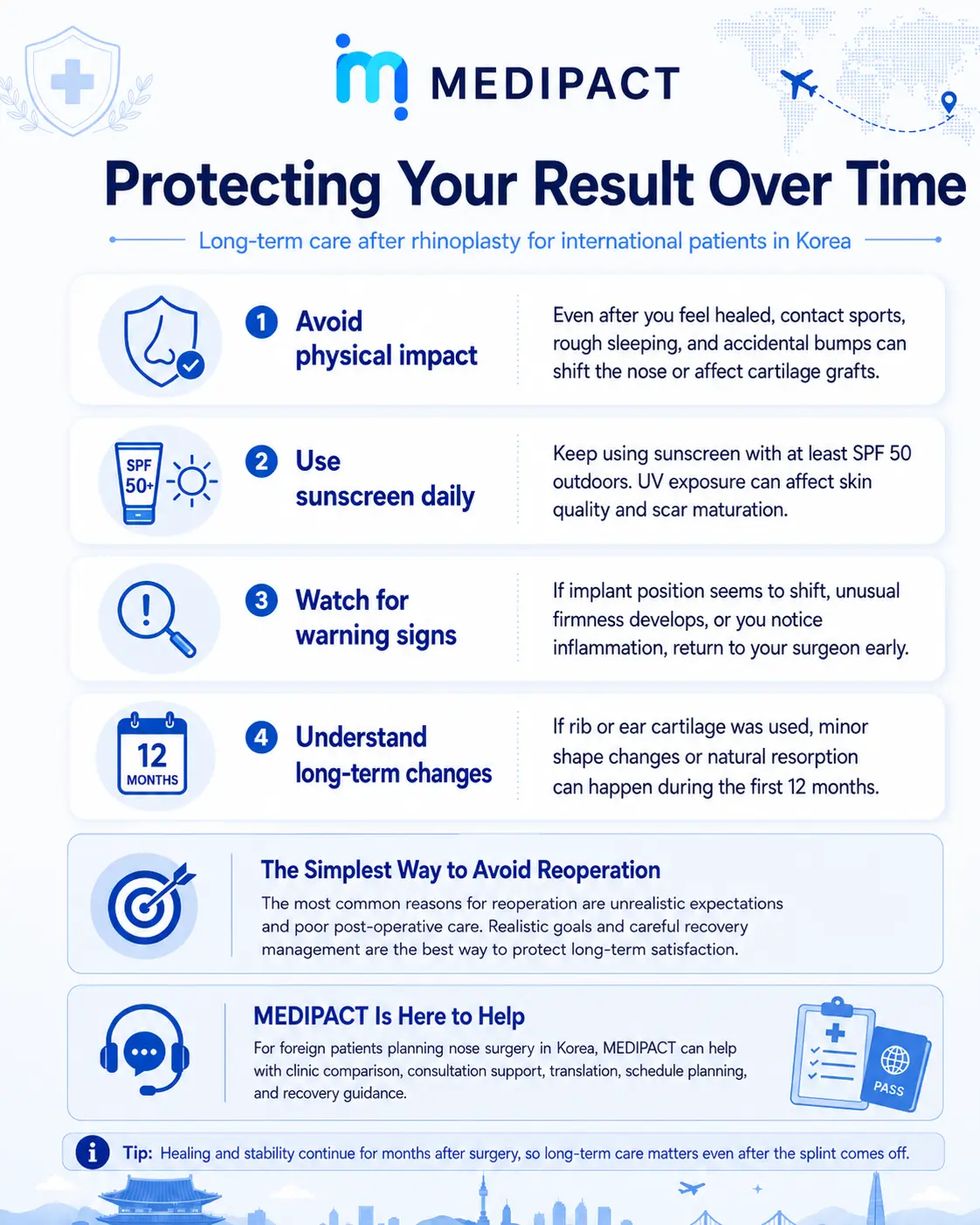
Stay alert to physical impact on the nose even after you feel fully healed. Contact sports, sleeping roughly, and accidental bumps can shift implant position or damage cartilage grafts many months after surgery.
Keep using sunscreen with at least SPF 50 outdoors. Long-term UV exposure affects the quality of nasal skin and slows the maturation of scars.
Do not ignore small warning signs. If the implant position seems to have shifted, if unusual firmness develops, or if you notice any sign of inflammation even months after surgery, go back to your surgeon. Problems caught early are almost always easier to resolve than full reoperations.
If rib or ear cartilage was used, be aware that natural resorption and minor shape changes can happen during the first twelve months. Your surgeon should discuss this with you at the three and six-month visits.
THE SIMPLEST WAY TO AVOID REOPERATION
Korean surgeons consistently point to two things behind most reoperation cases. The first is patients who came in with expectations that were far too high or not grounded in their actual anatomy. The second is patients who did not follow post-operative care instructions. Going into surgery with a realistic goal that works with your face, rather than against it, and then managing recovery carefully, are the two most reliable ways to stay satisfied with your result long term.
If you are planning nose surgery in Korea as a foreign patient, MEDIPACT can help you organize the process more clearly, from clinic comparison and consultation support to translation, schedule planning, and recovery guidance. The goal is not to push patients toward surgery, but to help them understand their options and prepare safely.
8. Frequently Asked Questions
Q: How long should I stay in Korea after rhinoplasty?
Most international patients plan to stay in Korea for at least 10 to 14 days after rhinoplasty so they can attend early follow-up visits, remove stitches or splints if needed, and confirm that initial healing is progressing safely. The exact travel timeline should always be confirmed with your surgeon.
Q: What is the usual rhinoplasty recovery time?
Rhinoplasty recovery time varies by patient and surgical method. Many patients feel comfortable returning to light daily activities within one to two weeks, but swelling can continue for several months. Tip definition and the final result may take three to six months, and sometimes longer for thicker skin or more complex cases.
Q: What should I ask during a rhinoplasty consultation in Korea?
Ask about the surgical method, implant or cartilage options, expected recovery timeline, possible risks, follow-up schedule, total cost, and what symptoms require urgent contact with the clinic. You should also ask what result is realistic for your anatomy, not just what result you want.
Q: How much does rhinoplasty in Korea cost?
Rhinoplasty cost depends on the clinic, surgeon, surgical method, implant or cartilage use, anaesthesia, and whether the case is primary or revision surgery. Before confirming surgery, ask whether the quoted price includes medication, follow-up visits, stitch or splint removal, and aftercare.
Q: Why is aftercare important after rhinoplasty?
Rhinoplasty aftercare helps reduce avoidable complications and supports a smoother recovery. Following instructions about sleeping position, medication, swelling control, activity limits, glasses, smoking, alcohol, and follow-up visits can affect both healing and long-term satisfaction.
Conclusion: Preparing for Rhinoplasty in Korea Safely
Preparing for rhinoplasty in Korea is not only about choosing a clinic or deciding on a nose shape. It also means understanding your surgical plan, confirming the full cost, preparing your medical history, following aftercare instructions, and giving your body enough time to recover.
For international patients, the process can feel more complicated because of language, travel schedules, clinic comparisons, and follow-up care. MEDIPACT helps patients compare suitable rhinoplasty clinics in Korea, coordinate consultations, support communication, and plan the recovery process more clearly before making a decision.
If you are considering rhinoplasty in Korea, start by preparing your consultation questions, checking your recovery timeline, and making sure you fully understand the procedure, cost, and aftercare plan before confirming surgery.