Stem Cell Treatment Trends in Korea

Stem Cell Therapy in Korea: Cost, Safety, Legal Status & What International Patients Should Know
Stem cell therapy in Korea is gaining attention among international patients interested in regenerative medicine, joint care, skin recovery, hair loss support, anti aging treatments and disease specific medical options. In areas where conventional treatments have not always been enough, such as knee joint pain, hair loss, skin regeneration and intractable diseases, new treatment possibilities are being studied, and more international patients are looking for safer, more structured treatment options in Korea.
However, the term stem cell therapy is broad and can sometimes be unclear. Some procedures, such as PRP, are often mentioned together with stem cell treatment even though they are not actually stem cell therapies. Even when autologous cells are used, as in BMAC or SVF, the legally permitted scope can vary depending on the indication, processing method, treatment purpose and qualifications of the medical institution.
For international patients, it is important to understand not only the treatment itself, but also the legal system, collection method, safety standards, expected recovery process, cost factors and aftercare plan. This guide explains what international patients should know before considering stem cell treatment or regenerative medicine in Korea.
Key Point to Know FirstStem cell related procedures are expanding in Korea, but patients must always confirm the disease or condition, treatment purpose, institution qualification, review or approval requirements and the specialist’s medical judgment. Stem cell therapy should not be understood as one simple treatment that applies to everyone. The correct approach depends on each patient’s diagnosis, medical history, treatment goal and the legal pathway for that specific procedure. |
01. What Changed in Korea’s Regenerative Medicine System in 2025–2026?
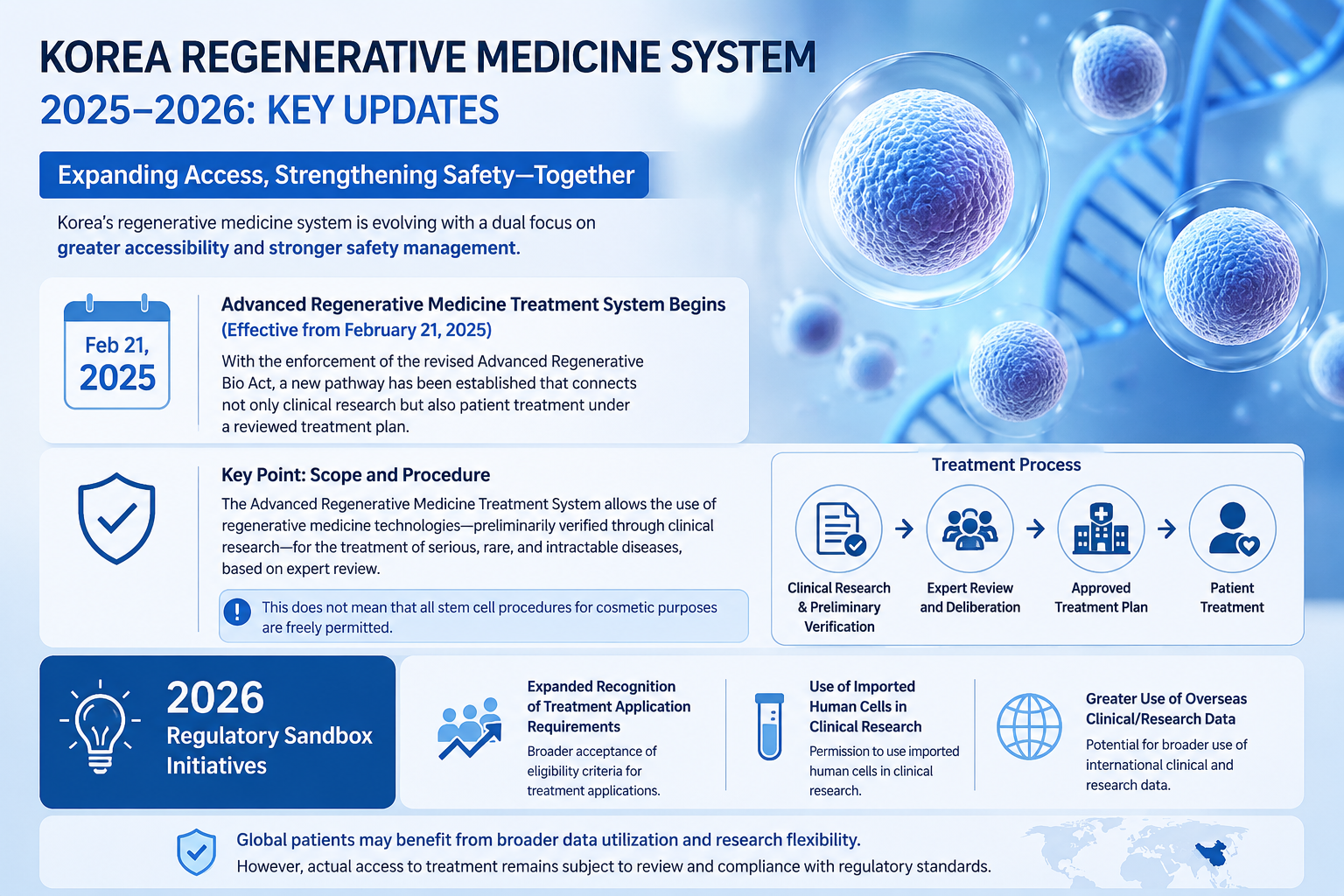
The recent direction of Korea’s regenerative medicine system is focused on expanding access while strengthening safety management.
From February 21, 2025, the revised Advanced Regenerative Bio Act introduced a treatment pathway where reviewed treatment plans may lead to actual patient care, not only clinical research. However, this mainly applies to serious, rare and intractable diseases, so it does not mean that all cosmetic or wellness related stem cell procedures are freely permitted.
In 2026, Korea has also been pursuing a planned regulatory sandbox in the advanced regenerative medicine field, including broader treatment application criteria and the use of imported human cells in certain clinical research settings.
Even so, actual treatment availability still depends on the patient’s condition, the institution’s qualifications and applicable review standards. International patients should therefore ask not only whether stem cell therapy is possible in Korea, but whether the specific treatment is legally and medically appropriate for their condition.
02. What Is Stem Cell Therapy?
Stem cells are cells that can self renew and, under certain conditions, develop into different types of tissue related cells. Regenerative medicine uses these cellular properties, or the substances and growth factors secreted by cells, to support tissue recovery.
One commonly discussed type is the mesenchymal stem cell, also known as MSC. MSCs are studied in relation to cartilage, bone, fat tissue, inflammation control, immune modulation and tissue recovery.
Another type is iPSC, or induced pluripotent stem cell. iPSCs are being studied for serious diseases such as Parkinson’s disease, spinal cord injury and diabetes. However, most iPSC related treatments are still in the research stage and should not be considered routine treatment options for general patients.
The key point is that stem cell therapy is not a single category. The cell source, processing method, injection route, legal scope and expected result can all differ depending on the treatment purpose.
03. How and Where Stem Cells Are Collected
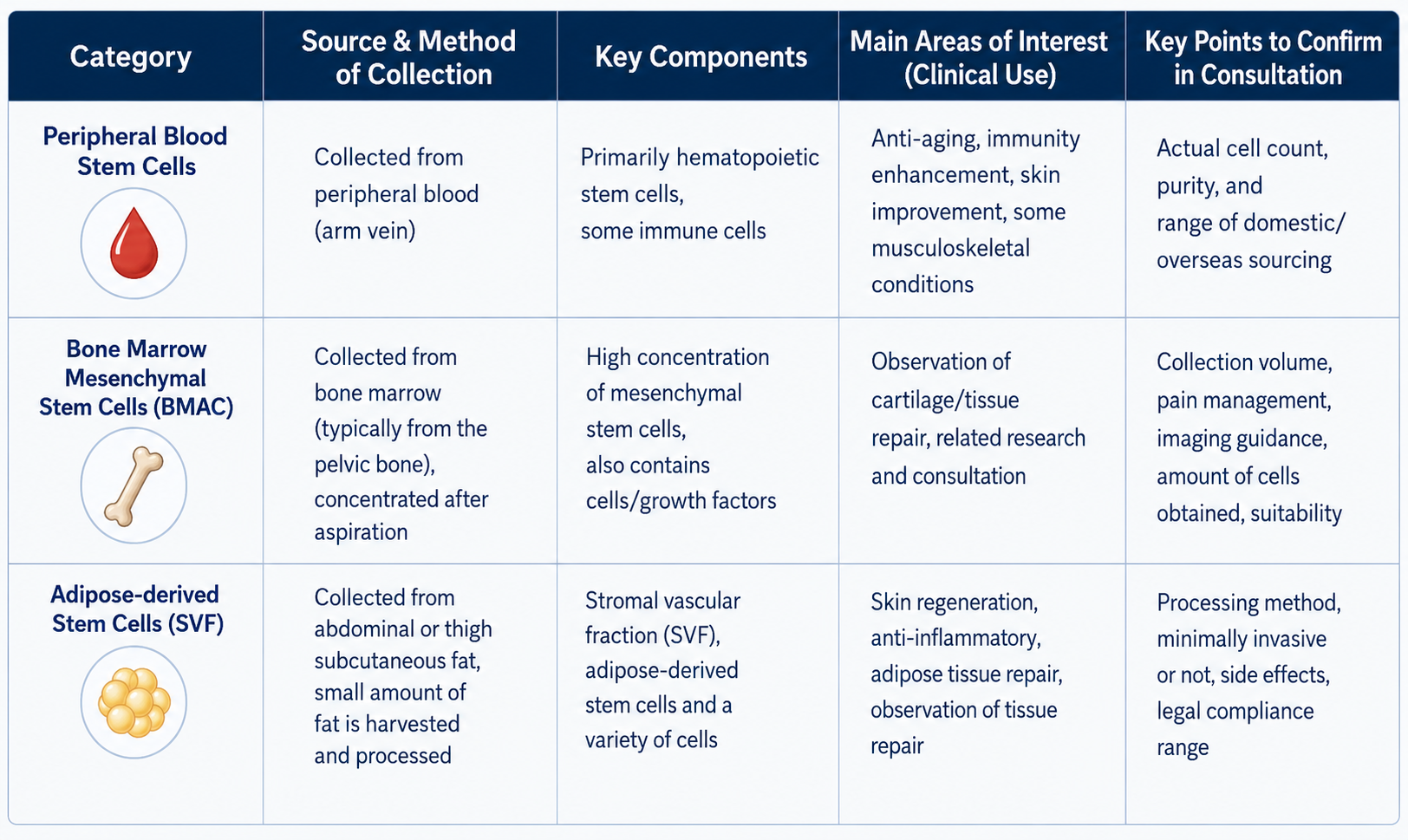
When international patients search for stem cell treatment in Korea, the methods they most commonly encounter are blood derived cell procedures, bone marrow stem cell procedures such as BMAC and adipose derived cell procedures such as SVF.
They share the feature of using autologous cells or components taken from the patient’s own body, but the actual collection process and medical meaning are different.
Blood Derived Cell Procedures
Blood derived procedures begin with blood collection from a vein in the arm. After collection, certain cell fractions may be separated, activated or concentrated. Depending on the purpose, they may be considered for intravenous use or local injection into areas such as the skin, scalp or around a joint.
Recently, these procedures have been discussed in relation to anti aging, fatigue recovery, skin and scalp care and musculoskeletal discomfort.
However, the wording should be used carefully. Ordinary blood does not contain stem cells as abundantly as fat tissue or bone marrow. Patients should confirm the actual components, cell count, processing method and injection route.
Bone marrow stem cells (BMAC): collected from marrow and concentrated
BMAC is usually collected from the iliac crest of the pelvic bone and then concentrated through processing methods such as centrifugation.
Bone marrow may contain hematopoietic cells, mesenchymal cells and growth factors. For this reason, BMAC is widely studied in relation to joint, cartilage and tissue recovery.
Because bone marrow collection is more invasive than a simple blood draw, patients should check the need for local anesthesia or sedation, pain management, infection control, imaging guidance and recovery instructions.
Adipose-derived stem cells (SVF): the stromal vascular fraction obtained from fat tissue
SVF is obtained from adipose tissue. A small amount of fat may be collected from areas such as the abdomen, thighs or flanks, then washed, separated and processed.
SVF may contain adipose derived stem and progenitor cells, vascular related cells and immune cells. It is often discussed in relation to skin regeneration, scars, fat grafting support, joint care and tissue recovery.
Patients should confirm the processing method, whether the procedure is considered minimally manipulated, the legal scope of practice and recovery issues such as bruising and swelling.
04. Where Is Stem Cell Therapy Used Today?
The most important distinction when trying to understand this field is the difference between areas already used clinically with accumulating evidence and possibilities still at the early clinical or research stage. Without that distinction, patients may expect treatments they cannot actually receive or place too much trust in procedures with weak evidence.
Blood Derived Cell Procedures
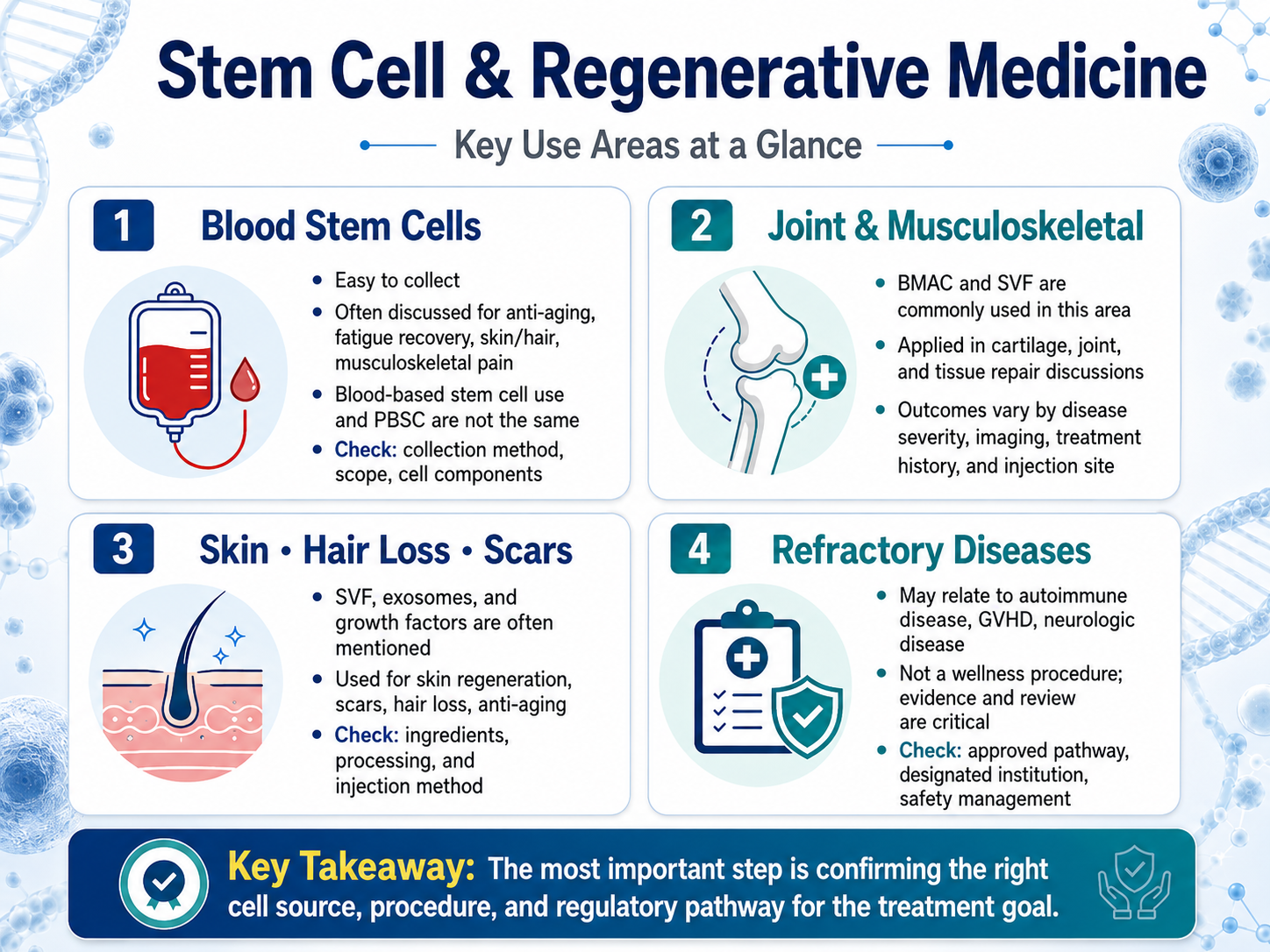
Blood derived cell procedures are often discussed for anti aging, fatigue recovery, skin and scalp care, and musculoskeletal discomfort because collection is relatively accessible. However, ordinary blood draw based procedures and PBSC in the hematopoietic stem cell field differ in both purpose and process, so patients should confirm the collection method, scope and components according to their treatment goal.
Joint and Musculoskeletal Areas
In the joint, cartilage and musculoskeletal field, autologous cell based procedures such as BMAC and SVF are actively being studied and used in selected cases. Expected results may vary depending on the degree of arthritis progression, imaging findings, previous treatment history and injection site.
Skin, Hair Loss and Scars
In skin regeneration, scars, hair loss and anti aging, adipose derived cell fractions, exosomes and growth factors are often mentioned. These are usually cosmetic procedures, and results vary depending on the patient’s skin condition, scarring, hair loss pattern and the clinic’s method. Patients should confirm the components, processing method and injection method before proceeding.
Refractory Diseases
Autoimmune diseases, graft versus host disease and neurological disorders are areas that may connect to the advanced regenerative medicine system. These are not wellness procedures. Disease specific evidence, review and approval, institutional designation and safety management systems are especially important. If an international patient is considering related treatment in Korea, the first thing to check is not simply whether it is possible, but what the regulatory pathway is for that specific disease.
05. Stem Cell Therapy in Korea Cost: What Affects the Price?
The cost of stem cell therapy in Korea can vary widely. There is no single standard price because each treatment may involve different tests, collection methods, processing steps and follow up care.
Cost may depend on the consultation, blood tests, imaging, cell source, processing method, injection area, number of sessions, sedation or anesthesia, medication, recovery care and interpretation support.
For international patients, it is important to check not only the price, but also what is included in the treatment plan. A lower price is not always better if the clinic does not clearly explain the legal basis, processing method, possible risks and aftercare system.
06. Why International Patients Pay Attention to Korea
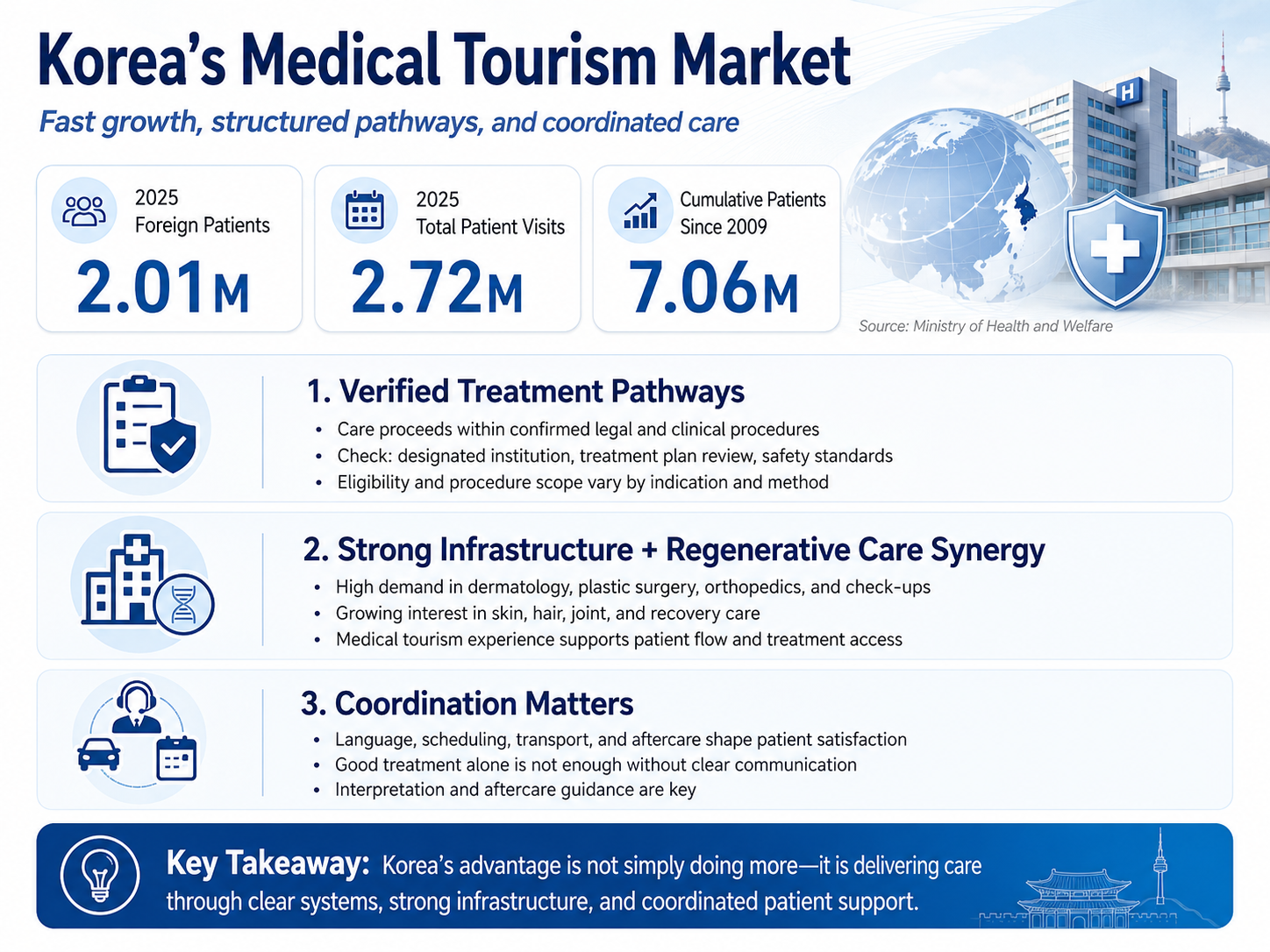
According to the Ministry of Health and Welfare, in 2025 the number of foreign patients who visited Korea reached 2.01 million on a unique-patient basis and 2.72 million on a visit basis, and since statistics were first compiled in 2009 the cumulative number of unique patients has reached 7.06 million. This shows that overseas demand for Korean healthcare is expanding beyond simple tourism into actual treatment choices.
1) Treatment Pathways That Can Be Verified Within the System
Korea’s strength is not that “anything can be done,” but that treatments are carried out within systems and procedures that patients can verify. For advanced regenerative medicine, patients should confirm whether the institution is properly designated, whether treatment plan review is required, and whether safety management standards are in place. Even for autologous cell based treatments, the legal scope can vary depending on the indication and method of administration.
2) Synergy Between Medical Infrastructure and Cosmetic and Regenerative Medicine
Korea has strong medical infrastructure in areas that are highly demanded by international patients, including dermatology, plastic surgery, orthopedics and health screening. At the same time, Korea has accumulated extensive experience in medical tourism. This creates a strong connection between regenerative medicine and fields such as skin, hair loss, joint care and recovery management.
3) Language, Scheduling and Aftercare Coordination
For international patients, language, booking, transportation and recovery management are just as important as the treatment itself. Even if a Korean medical institution is excellent, patient satisfaction can decrease if the patient cannot clearly understand the consultation or misses important aftercare appointments. For this reason, coordination that combines hospital selection, medical interpretation, schedule management and aftercare guidance is essential.
07. A Checklist for Choosing a Good Institution and Doctor
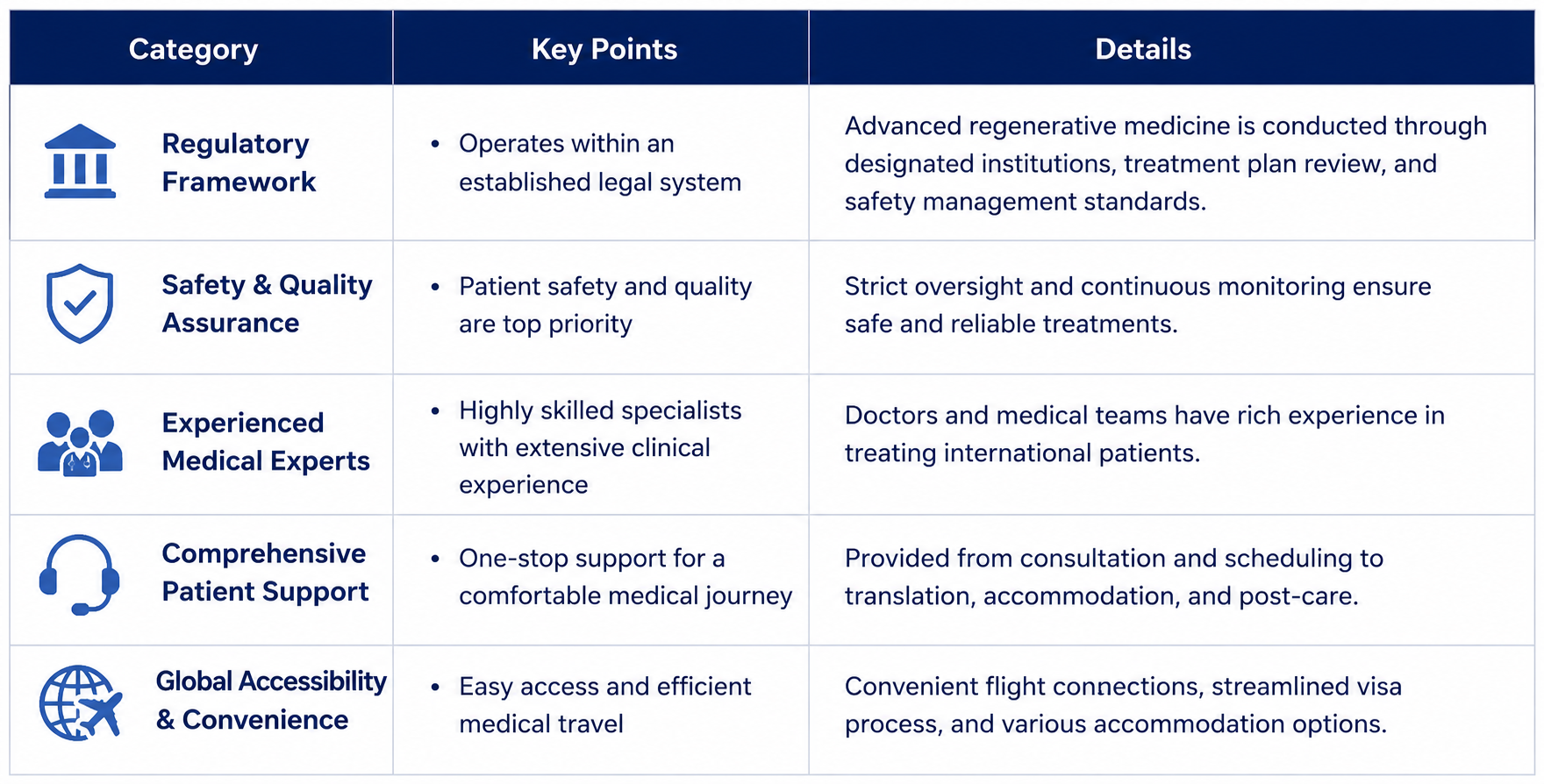
Even with the right system in place, the final outcome depends heavily on the judgment of the institution and the medical team. It is wise to confirm the criteria below directly during your consultation.
Check Item | Reassuring sign | Warning sign |
Institutional qualifications | Explains whether it is a designated advanced regenerative medicine institution, or its lawful scope of practice | Does not clearly explain the institution’s qualifications or legal basis |
Indication | Decides only after confirming your diagnosis, disease stage, and prior treatment history | Recommends a procedure immediately at the first consultation |
Procedure explanation | Explains expected benefits and limits, the number of repeat sessions, and side effects together | Guarantees a cure, a permanent effect, or 100% improvement |
Cell processing | Explains the collection, processing, and injection steps and its hygiene and management standards | Will not disclose the components or the processing |
Effectiveness | Explains expected benefits and limits, repeat sessions, and side effects together | Guarantees a cure, a permanent effect, or 100% improvement |
Aftercare | Provides a recovery period, an adverse-event contact system, and a follow-up plan | Responsibility for post-procedure care is unclear |
08. How International Patients Can Best Prepare
The hardest part of looking into Korean regenerative medicine from abroad is confirming “whether the treatment suits my condition,” “whether it is permissible within the system,” and “whether I have accurately understood the procedure discussed with the hospital.” MEDIPACT helps patients make decisions based on objective information and specialist consultation.
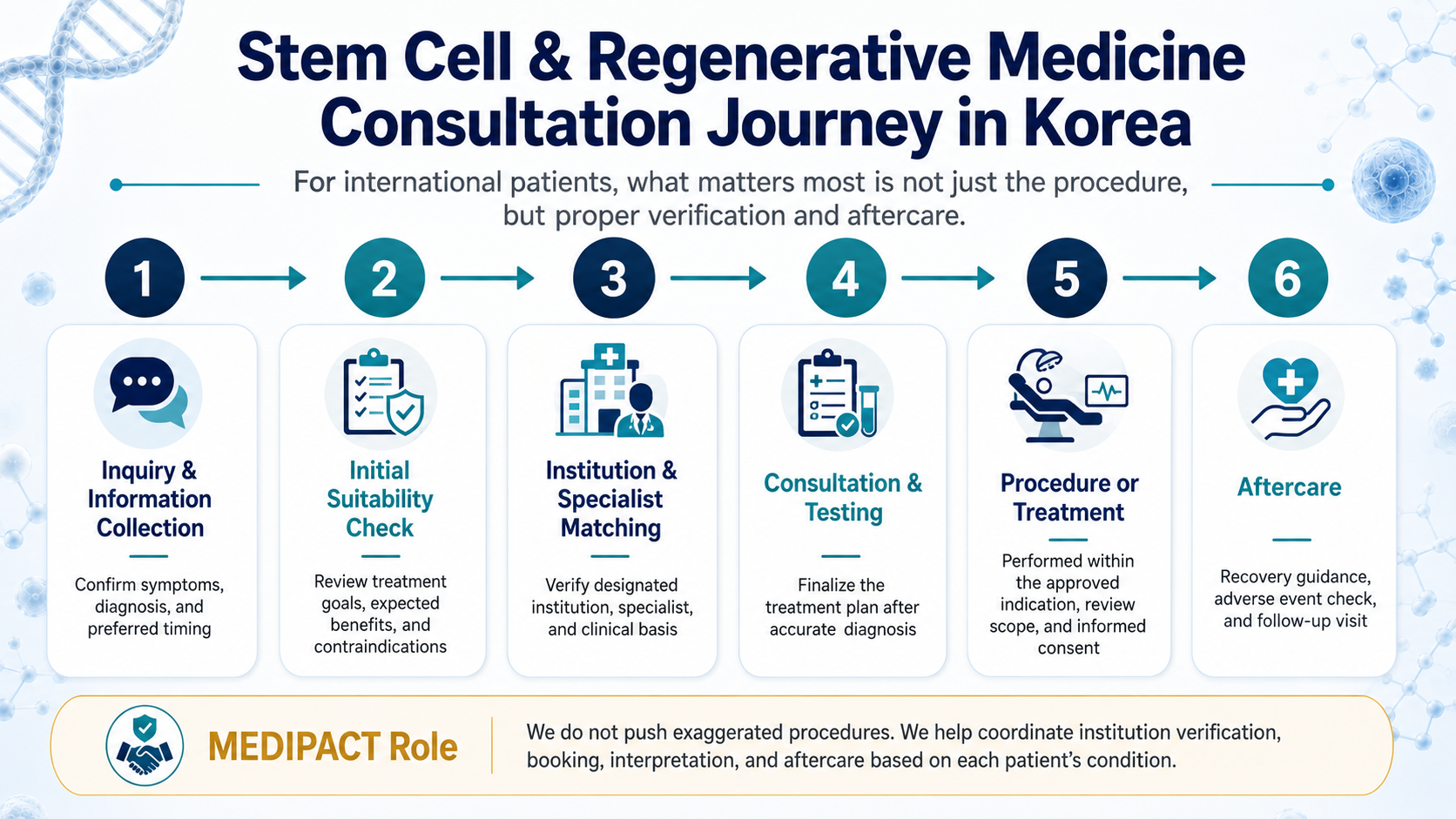
Helpful documents to prepare before your consultation
• Your current diagnosis and symptoms, and how long you have had the pain or discomfort
• Existing test results: MRI, X-ray, blood tests, skin/hair-loss diagnostic records, etc.
• Medications you are taking, underlying conditions, allergies, and surgical history
• Possible dates to visit Korea, length of stay, and whether you will be accompanied
• The results you hope for and the treatment approaches you would rather avoid
MEDIPACT’s Role MEDIPACT helps with the information patients need, identifying suitable medical institutions, consultation interpretation, and coordinating bookings, scheduling, and aftercare. As a matter of principle, we do not push patients to proceed when a treatment does not suit their condition or when the evidence is unclear. |
FAQ: Stem Cell Therapy in Korea
Q1. If I go to Korea, can I receive the stem cell treatment I want right away?
No. What is possible depends on the treatment purpose, disease or condition, risk level, cell processing method, medical institution qualifications and whether the treatment plan has been reviewed. For advanced regenerative medicine in particular, the designated institution and treatment plan review are important.
Q2. Can stem cells really be collected from blood?
Some blood derived cell procedures begin with blood collection, but the wording should be used carefully. Ordinary blood does not contain stem cells as abundantly as fat tissue or bone marrow. Patients should confirm how the cell fraction is separated after blood collection, and in some cases, a larger volume of blood may be required.
Q3. What is the usual process for blood derived cell therapy?
It is generally described as a process involving medical consultation and blood tests, blood collection or apheresis, separation and activation or concentration of the cell fraction, and then review of intravenous or local injection. The actual procedure may vary depending on the institution’s equipment, cell processing method and the patient’s condition.
Q4. Where and how are BMAC and SVF collected?
BMAC is usually obtained by aspirating bone marrow from the iliac crest of the pelvic bone and then concentrating it. SVF is obtained by collecting a small amount of subcutaneous fat from areas such as the abdomen, thighs or flanks, then separating and processing it.
Q5. Are the effects permanent?
This varies widely from person to person. The outcome and how long it lasts depend on the degree of disease progression, lifestyle, previous treatment history, cell processing method and injection method.
Q6. Are cell therapies for cosmetic or anti aging purposes safe?
The fact that cells or components are autologous does not make a procedure automatically safe. Patients should check the components, manufacturing and processing steps, infection control, injection route, indication, medical team’s explanation and aftercare system.
Q7. How long should international patients plan to stay?
It depends on the consultation, tests, whether a procedure is performed and the need for recovery management. A short stay may be enough for simple procedures, but consultations involving joint conditions or intractable diseases should allow enough time for testing and follow up appointments.
In Closing: Why Korean Stem Cell Treatment Should Be Chosen Carefully
Korea’s stem cell and regenerative medicine field is maturing quickly in terms of both regulatory systems and medical infrastructure. Even so, most regenerative medicine should be understood as a way to support recovery or as a disease specific treatment possibility, rather than as a guaranteed cure. The level of evidence and the legally permitted scope can also differ depending on the field, condition and treatment method.
For this reason, the most important step is to confirm whether the procedure suits your condition, whether the specialist explains the treatment thoroughly and whether the institution and cell processing process are trustworthy. Understanding exactly what is involved, choosing a verified medical institution and deciding only after a thorough consultation are the first steps to using Korean regenerative medicine safely.
※ This content is provided as medical reference information and does not replace diagnosis or treatment. Whether to undergo a procedure, and how, must be decided through consultation with a specialist according to your individual condition. Benefits and indications vary from person to person, and the regulatory system, designated institutions, and new-medical-technology status may change over time — please check official sources such as the Ministry of Health and Welfare, the K-ARM (Advanced Regenerative Medicine) portal, and the Korea Health Industry Development Institute.
References — Official and Academic Sources
• Ministry of Health and Welfare, “Advanced Regenerative Medicine Treatment System Offers New Treatment Opportunities for Patients with Rare and Intractable Diseases,” Feb 19, 2025.
• K-ARM (Advanced Regenerative Medicine Portal), “Guide to the Advanced Regenerative Medicine System (revised act effective Feb 21, 2025),” Feb 20, 2025.
• K-ARM (Advanced Regenerative Medicine Portal), “Guide to Applying for the Planned Regulatory Sandbox in the Advanced Regenerative Field (FY2026),” Mar 12, 2026.
• Ministry of Health and Welfare, “Foreign Patients Attracted in 2025 Surpass 2 Million; Korea Emerges as a ‘Central Hub’ for Asian Medical Tourism,” Apr 24, 2026.
• Jawanda H, et al. “Platelet-Rich Plasma, Bone Marrow Aspirate Concentrate, and Hyaluronic Acid Injections Outperform Corticosteroids…” Arthroscopy, 2024.
• Anitua E, et al. “Platelet-Rich Plasma in the Management of Alopecia: A Systematic Review and Meta-Analysis of Clinical Evidence.” Dermatology and Therapy, 2025.
• Sawamoto N, Doi D, et al. “Phase I/II trial of iPS-cell-derived dopaminergic cells for Parkinson’s disease.” Nature, 2025.