Which Facelift Is Right for You?

A Complete Guide to Mini, Full, Neck, and Forehead Lifts
Facial sagging and deepening wrinkles are natural parts of aging. At some point, non-invasive treatments such as Botox, fillers, and thread lifts may no longer deliver the level of improvement you want. This is when many people begin considering a more fundamental solution: a facelift.
However, “facelift” is not a one-size-fits-all procedure. There are several surgical options, including mini facelift, full facelift, forehead lift, and neck lift. The right choice depends on where the sagging appears, how advanced it is, your recovery timeline, and your desired result. This guide compares the main facelift options side by side to help you understand which approach may be most suitable for you.
Who is this guide for?
This guide is for anyone considering facelift surgery in Korea and trying to understand whether a mini facelift, full facelift, forehead lift, or neck lift is the right option based on their age, sagging pattern, recovery time, and desired result.
1. Mini Facelift: For the Earliest Signs of Aging
Best for: People in their late 30s to late 40s with mild to moderate sagging.
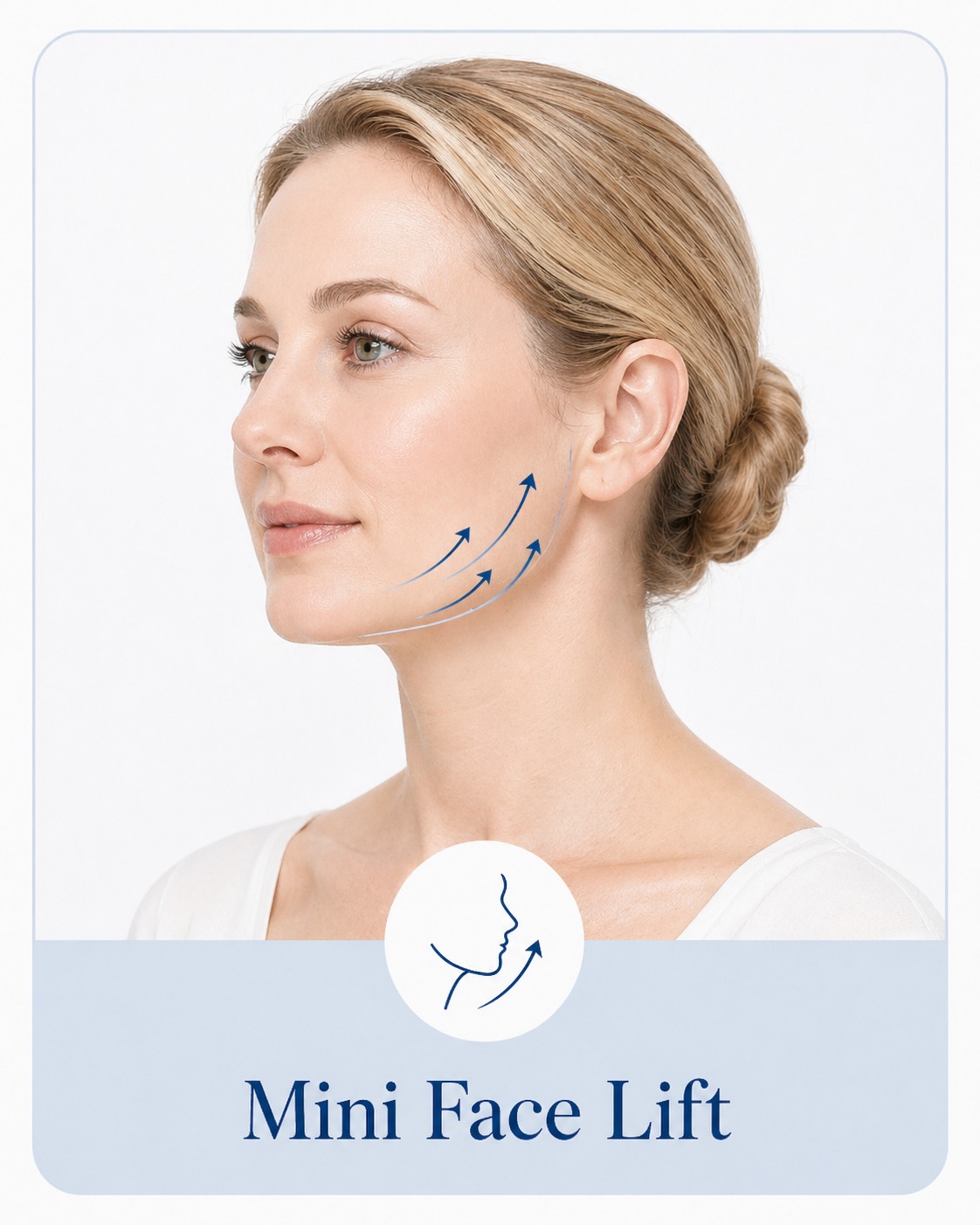
What is a mini facelift?
A mini facelift is a less extensive version of a full facelift that uses shorter incisions and focuses on early sagging in the mid-face, lower face, or jawline. Although it is called “mini,” it is not simply a skin-tightening procedure. Depending on the patient’s condition and the surgeon’s technique, the deeper facial support layer, known as the SMAS layer, may also be tightened to create a firmer and more natural-looking contour.
Who is a good candidate for a mini facelift?
A mini facelift may be suitable for people who have:
• Late 30s to late 40s with mild sagging that no longer responds well to thread lifts
• Partial sagging in the mid-face, such as nasolabial folds, or lower face, such as deep cheeks and jawline
• Loose skin caused by previous facial contouring surgery, two-jaw surgery, or excessive facial liposuction
• A preference for a shorter recovery period and smaller incisions compared to a full facelift
Mini facelift at a glance
Incision: Short incision in front of the ear or along the hairline
Recovery time: Around 1–2 weeks to return to daily life
Results last: Usually 5–7 years, depending on age, skin condition, lifestyle, and surgical technique
2. Full (Surgical) Facelift : For Moderate to Advanced Aging
Best for: People in their 50s and beyond with moderate to advanced sagging across the lower face, cheeks, jawline, and neck.
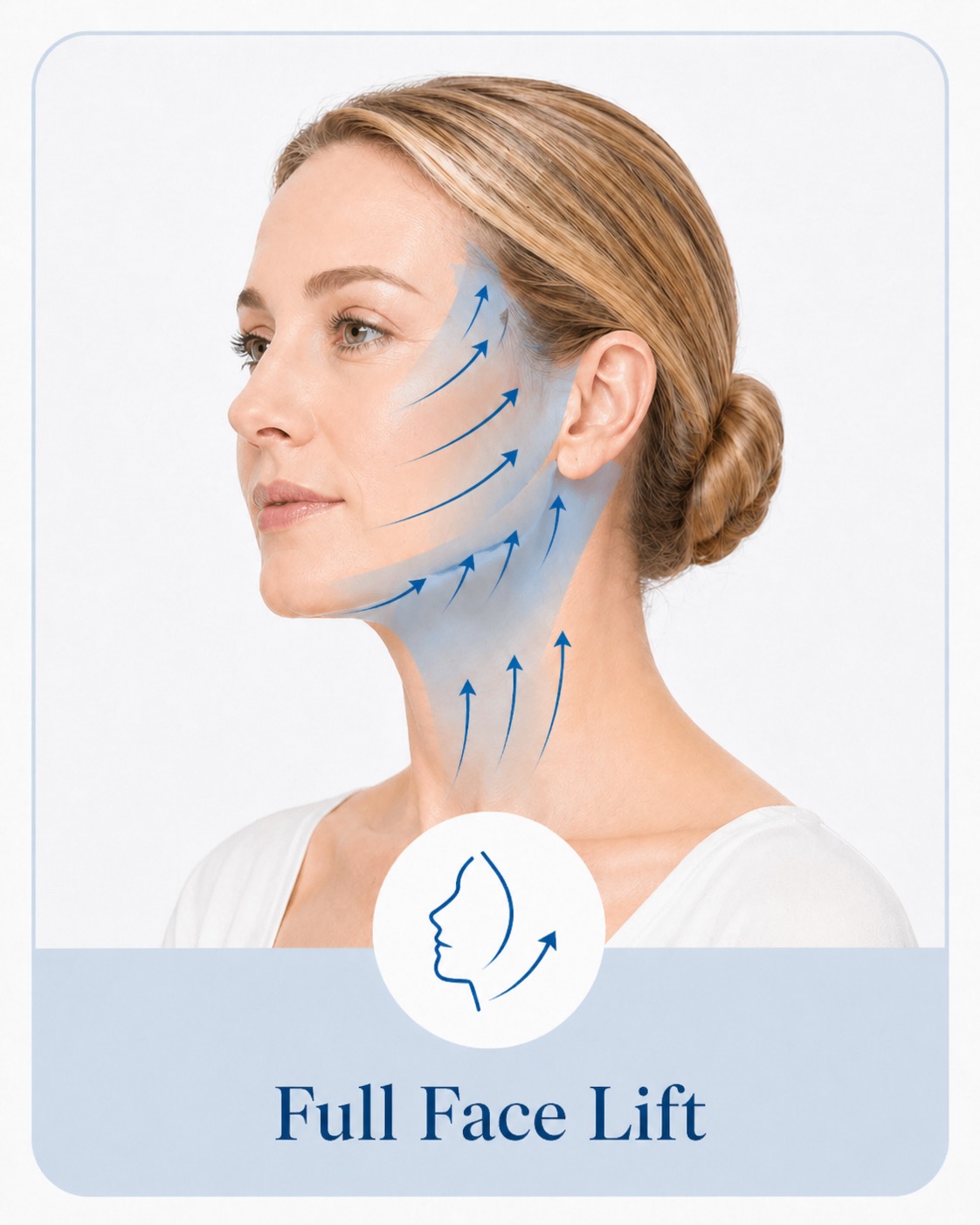
What is a full facelift?
A full facelift, also called a surgical facelift or traditional facelift, is a more comprehensive lifting procedure for patients with more noticeable facial sagging. Compared to a mini facelift, it usually involves longer incisions and a wider lifting area.
The incision commonly begins near the hairline around the temples, follows the natural curves around the ear, and may extend behind the ear. Depending on the patient’s condition and the surgeon’s technique, the skin, SMAS layer, fat, and supporting facial tissues may be repositioned and secured to create a firmer, more lifted facial contour. Excess skin is then carefully removed.
Who is a good candidate for a full facelift?
A full facelift may be suitable for people who have:
• Moderate to advanced sagging across the cheeks, jawline, and lower face
• Deep nasolabial folds, marionette lines, and sagging cheeks at the same time
• Loose skin that cannot be sufficiently improved with non-surgical lifting treatments
• A desire for more comprehensive and longer-lasting improvement from one surgery
• Enough recovery time for a more extensive surgical procedure
Full facelift at a glance
Incision: Longer incision from the hairline around the ear and sometimes behind the ear
Recovery time: Swelling and bruising are common for the first 2 weeks; many patients return to daily life in around 3–4 weeks
Results last: Usually 5–10 years, depending on age, skin condition, lifestyle, and surgical technique
Recovery Tip:
Following your surgeon’s recovery instructions can make a major difference in how smoothly you heal. Proper swelling management, wound care, sleep position, diet, and follow-up visits can help reduce avoidable complications and support better final results.
3. Forehead Lift: For Sagging Brows and Deep Forehead Lines
Also known as Brow lift or endoscopic forehead lift.
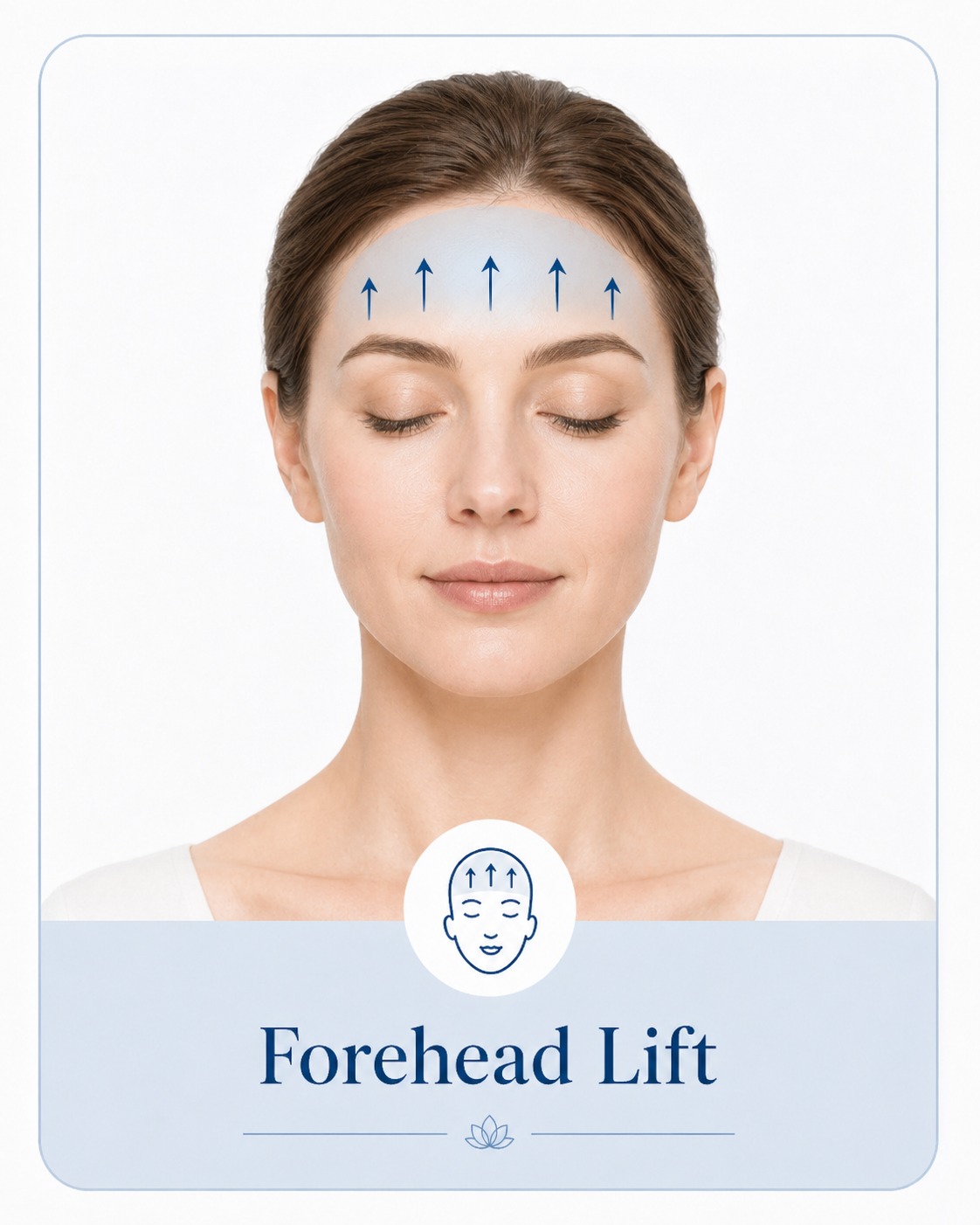
What is a forehead lift?
A forehead lift is an upper-face procedure that lifts a sagging forehead and brows while improving horizontal forehead lines and vertical frown lines between the eyebrows.
While the traditional forehead lift used a longer incision across or near the hairline, the endoscopic forehead lift is now a common option. This technique usually involves 3 to 5 small incisions, about 1–2 cm each, made inside the hairline. An endoscope is then used to help the surgeon see the underlying tissues more clearly and perform more precise dissection.
The goal is not simply to pull the skin. Depending on the patient’s anatomy and the surgeon’s technique, deeper tissues such as the temporal fascia and supporting forehead tissues may be lifted and secured. Korean clinics may use fixation methods such as bone tunneling, Pentapix, or Endotine to help maintain the lifted position.
As the forehead and brows are gently lifted, concerns such as forehead wrinkles, glabellar lines, brow drooping, and heaviness around the upper eyelids may improve together. The result can be a softer, brighter, and more refreshed expression.
Who is a good candidate for a forehead lift?
A forehead lift may be suitable for people who have:
• Deep horizontal forehead lines that make the face look stern or tired
• Frown lines between the brows that have become visible even at rest
• Drooping eyebrows that create a sad, tired, or harsh appearance
• Heavy upper eyelids caused by brow descent or thick tissue above the eyelid fold
• A short distance between the brows and eyes, creating a closed-off look
• Limited improvement from upper blepharoplasty alone
• A heavier or harsher appearance after previous eyelid surgery
Forehead lift at a glance
Incision: Usually 3–5 small incisions, about 1–2 cm each, inside the hairline for an endoscopic forehead lift
Recovery time: Approximately 1–2 weeks for daily life, depending on swelling and bruising
Results last: Usually 5–10 years, depending on age, skin condition, fixation method, lifestyle, and surgical technique
4. Neck Lift (with Platysmaplasty): For a Sharper Jaw and Slimmer Profile
Best for: Visible neck banding, double chin, loose neck skin, or a blurred jawline.
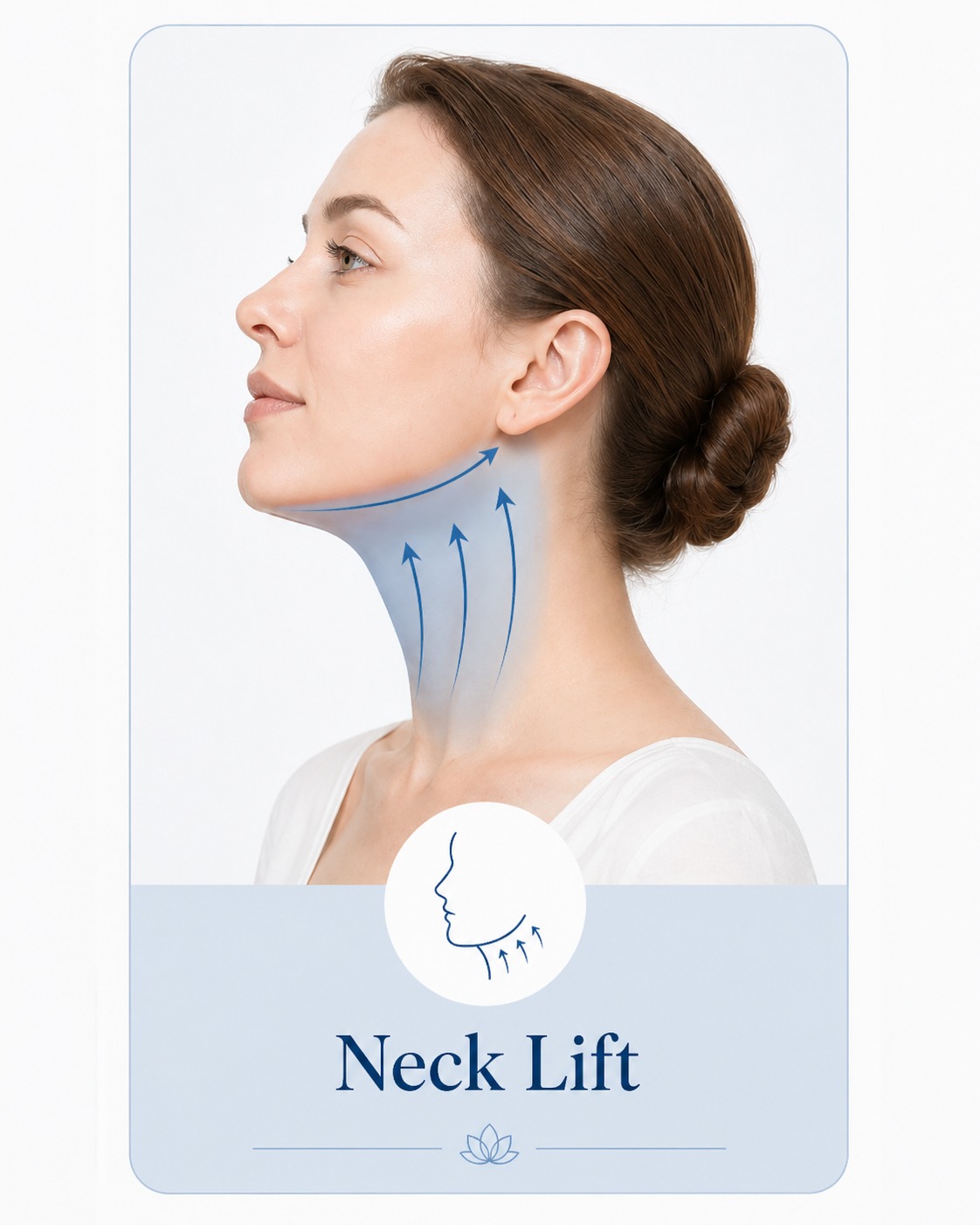
What is a neck lift?
A neck lift is a surgical procedure that improves sagging skin, excess fat, and visible muscle bands around the neck. It is often performed to create a cleaner jawline, a smoother neck contour, and a more defined profile.
Depending on the patient’s condition, the procedure may involve tightening the platysma muscle, removing or repositioning excess fat, and trimming loose skin. A neck lift is also commonly combined with a full facelift or SMAS lift when sagging affects both the lower face and neck.
The incision is usually made under the chin, and in some cases, additional incisions may be placed behind the ears to improve skin tightening and contour.
Who is a good candidate for a neck lift?
A neck lift may be suitable for people who have:
• Visible vertical neck bands, also known as platysmal bands
• Excess fat under the chin, creating a double chin appearance
• Loose or sagging skin around the neck
• A blurred jawline or weak separation between the face and neck
• A heavy lower-face appearance caused by neck tissue sagging
• Neck aging that does not improve enough with non-surgical lifting treatments
Neck lift at a glance
Incision: Usually under the chin, with possible additional incisions behind the ears
Recovery time: Around 2 weeks for daily life; a neck compression band may be required for a period
Results last: Usually 5–10 years, depending on age, skin condition, lifestyle, and surgical technique
Pairs well with: Full facelift or SMAS lift when lower-face sagging is also present
5. Comparison Table
Use this table to compare each facelift type based on the main concern, incision area, recovery time, and how long results usually last. (Mini Facelift vs Full Facelift vs Forehead Lift vs Neck Lift)
Procedure | Best for | Incision | Recovery | Results last |
|---|---|---|---|---|
Mini Facelift | Late 30s–40s, mild to moderate sagging | Short incision near the ear or hairline | Around 1–2 weeks | Usually 5–7 years |
Full Facelift | Moderate to advanced full-face sagging | Longer incision from the hairline around the ear and sometimes behind the ear | Around 3–4 weeks | Usually 5–10 years |
Forehead Lift | Brow droop, forehead lines, heavy upper eyelids | 3–5 small endoscopic incisions inside the hairline | Around 1–2 weeks | Usually 5–10 years |
Neck Lift | Platysmal bands, double chin, loose neck skin, blurred jawline | Under the chin, with possible incisions behind the ears | Around 2 weeks | Usually 5–10 years |
Still unsure which lifting option is right for you? Explore Medipact’s facelift and lifting service page to understand the treatment process, doctor matching, and recovery support available for international patients.
6. Facelift FAQs: Questions Worth Asking
Q1. How long does a facelift last?
A mini facelift usually lasts around 5–7 years, while a full facelift, forehead lift, and neck lift often last around 5–10 years. However, results vary depending on age, skin condition, lifestyle, surgical technique, and post-operative care. Aging continues naturally, so no facelift is permanent, but many patients continue to look more refreshed and lifted compared to how they may have aged without surgery.
Q2. What is the difference between a mini facelift and a full facelift?
A mini facelift uses shorter incisions and focuses on early sagging in the mid-face, lower face, or jawline. It usually has a shorter recovery period of around 1–2 weeks and results may last around 5–7 years.
A full facelift is more comprehensive. It usually involves longer incisions around the hairline and ear area and addresses more advanced sagging across the cheeks, jawline, lower face, and sometimes the neck. Recovery is usually around 3–4 weeks, and results may last around 5–10 years.
Q3. What is the best age for a facelift?
There is no single best age for a facelift. The right timing depends more on your skin condition, sagging pattern, facial anatomy, and goals than your exact age. In general, a mini facelift may be considered by people in their late 30s to late 40s with early sagging, while a full facelift may be more suitable for people in their 50s and beyond with more advanced sagging.
Q4. Are facelift scars visible?
Facelift incisions are usually placed along natural folds around the ear, hairline, or under the chin, depending on the procedure. When performed carefully, scars are designed to be as discreet as possible. However, scar visibility depends on your skin type, healing tendency, incision placement, suturing technique, and post-operative scar care.
Q5. How long is recovery from a facelift?
Recovery varies depending on the procedure and individual healing speed, but a general timeline is:
1–2 weeks: Swelling and bruising are usually most noticeable. Going out may still feel uncomfortable.
3–4 weeks: Many patients feel more comfortable returning to social activities.
2–3 months: Subtle swelling continues to improve.
6 months–1 year: Final results become more visible as tissues fully settle.
Q6. Can non-surgical lifting replace a facelift?
Non-surgical treatments such as Ultherapy, Shrink, Botox, fillers, and thread lifts can help with early signs of aging, mild skin laxity, or volume-related concerns. However, when sagging becomes more advanced, non-surgical treatments may not provide the same level of lifting as surgery. In those cases, a surgical facelift may be more effective for longer-lasting structural improvement.
Q7. Do Korean clinics treat international patients for facelift surgery?
Yes, many Korean clinics treat international patients for facelift surgery. However, international patients should consider a few important points before choosing a clinic.
First, surgeon experience matters because skin thickness, facial structure, and soft tissue characteristics can vary between patients. The surgeon should be able to customize the plan based on your anatomy and goals.
Second, it is important to choose a clinic that can safely support foreign patients, including consultation, medical interpretation, anesthesia consent, allergy checks, post-operative care, and emergency communication.
Third, plan enough time in Korea. For facelift surgery, many patients should prepare around 2–4 weeks for consultation, surgery, swelling checks, suture removal, and follow-up care.
Q8. How should I care for myself during facelift recovery?
Always follow your surgeon’s specific instructions, but common recovery principles include:
• Sleep with your head elevated during the early recovery period
• Eat protein-rich meals to support healing
• Avoid smoking and alcohol during recovery
• Avoid strong facial movements, heavy exercise, and sauna use until cleared by your clinic
• Attend all scheduled follow-up visits
• Avoid direct sun exposure to help reduce scar pigmentation risk
Final Thoughts: Choosing the Right Facelift in Korea
A facelift is no longer a single, one-size-fits-all surgery. Mini facelift, full facelift, forehead lift, and neck lift each target different concerns, so the right approach depends on your sagging pattern, facial anatomy, recovery timeline, and desired result. The most expensive or most extensive surgery is not automatically the best choice, which is why a thorough consultation with a qualified specialist matters.
For international patients planning a facelift in Korea, choosing a clinic requires extra care. Surgical techniques, clinic strengths, and surgeon experience can vary widely, and there is often a gap between Korean-language reviews and English-language information. Consultations, anesthesia consent, suture removal, swelling care, and emergency communication are also usually handled in Korean, which can feel overwhelming if you are preparing alone.
This is where Medipact can help. Medipact supports international patients with personalized hospital matching, medical interpretation, scheduling, and structured recovery support. For patients specifically interested in lifting procedures, you can also explore Medipact’s facelift and lifting service page, which explains the consultation process, SMAS facelift approach, patient journey, and real result examples.
If you are considering a facelift in Korea, you can request a 1:1 consultation with Medipact to compare suitable clinics, understand surgeon recommendations, and plan your treatment journey from consultation through recovery.